

Reaching the end of a construction or renovation project is an exciting milestone. After weeks or months of planning, building work, inspections and finishing touches, homeowners are finally ready to enjoy their completed space.
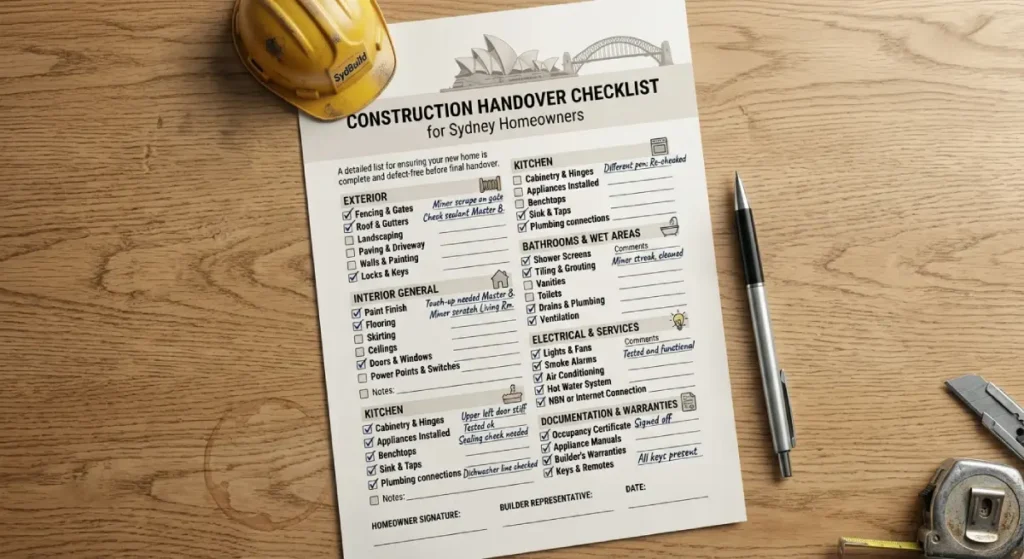
However, the project is not quite finished when the last tradesperson leaves the site.
The construction handover is an important stage where the completed work is reviewed, outstanding items are identified, documents are collected and the homeowner receives the information needed to look after the property.
Having a clear construction handover checklist can help Sydney homeowners identify incomplete work, confirm that agreed works have been completed and ensure important documentation is provided before the project is formally closed.
At TSC Build Construction and Renovations, we understand that a successful building project involves more than construction. Careful planning, project management, quality checks and a structured handover all contribute to a smoother experience from beginning to completion.
What Is a Construction Handover?
A construction handover is the process of formally transferring a completed building project from the construction team to the property owner.
During handover, the project is reviewed to confirm that the agreed construction works have been completed and that any remaining defects or outstanding items are recorded.
Depending on the project, handover may involve:
- A final inspection
- Reviewing completed works
- Identifying defects or outstanding items
- Checking fixtures and finishes
- Confirming services are operating
- Collecting warranties and certificates
- Reviewing maintenance information
- Receiving keys, remotes and access devices
- Confirming outstanding variations
- Finalising project documentation
The exact handover process will depend on the type, size and contractual requirements of the project.
For homeowners undertaking a major renovation, handover should be considered part of the overall construction process rather than an afterthought.
Why Is the Construction Handover Important?
A proper handover provides an opportunity to review the completed project before construction is formally closed.
It can help homeowners understand what has been completed, identify items requiring attention and collect information they may need in the future.
A well-managed handover can also provide greater clarity about:
- What work has been completed
- What items remain outstanding
- Which warranties apply
- How fixtures and systems should be maintained
- Which documents should be retained
- Who to contact regarding outstanding items
This is one reason construction project management remains important right through to project completion.
TSC Build’s Construction Project Management Sydney service includes planning, construction coordination, supervision and final project handover.
For NSW homeowners, it’s also important to understand that the occupation certificate is separate from the builder’s handover process. The NSW Planning Portal explains that an occupation certificate confirms a building is suitable for occupation and is issued following the required certification process. See the NSW Planning Portal’s post-build guidance for the current requirements.
Construction Handover Checklist
Before accepting the completed project, homeowners should work through a structured inspection rather than relying on a quick walk-through.
Here are the key areas to consider.
1. Review the Original Scope of Work
Start by comparing the completed project with the original scope of work and agreed plans.
Depending on your project, this may include:
- Building works
- Structural changes
- Room layouts
- Doors and windows
- Flooring
- Walls and ceilings
- Kitchen or bathroom works
- Electrical installations
- Plumbing
- Joinery
- Painting
- External works
- Landscaping or outdoor structures
The purpose is not necessarily to inspect every detail yourself, but to confirm that the agreed scope has been addressed.
For larger renovation projects, keeping your original plans, selections and variations organised throughout construction makes this process much easier.
If you’re planning a renovation before reaching the handover stage, our guide on How to Plan a Home Renovation in Sydney explains why establishing a clear scope and making decisions early can help reduce problems later.
2. Inspect Walls, Ceilings and Finishes
Take time to inspect visible finishes throughout the property.
Look for:
- Cracks or visible damage
- Uneven surfaces
- Incomplete painting
- Gaps around fittings
- Damaged plasterboard
- Inconsistent finishes
- Loose or damaged trim
- Incomplete sealing or caulking
Some minor imperfections may be normal depending on the materials and project specifications, so concerns should be assessed against the agreed quality requirements.
The important point is to identify anything that appears incomplete, damaged or inconsistent with the agreed works.
3. Check Doors and Windows
Open and close every newly installed or modified door and window.
Check that:
- Doors open and close correctly
- Locks operate properly
- Handles are secure
- Windows open and close smoothly
- Frames appear correctly aligned
- Weather seals are intact
- Screens and hardware are fitted correctly
Pay particular attention to doors and windows that were installed as part of an extension or renovation.
4. Test Electrical Fixtures
Electrical work should be completed and checked by appropriately licensed professionals.
During the homeowner handover, you can check that fixtures and controls are operating as expected.
Consider checking:
- Light switches
- Light fittings
- Power points
- Exhaust fans
- Ceiling fans
- Appliances
- External lighting
- Smoke alarms where applicable
If something does not operate as expected, record it for discussion with the project team.
5. Check Plumbing Fixtures
Run taps and check visible plumbing fixtures throughout the property.
Depending on the project, inspect:
- Kitchen taps
- Bathroom taps
- Showers
- Toilets
- Sinks
- Basins
- Baths
- External taps
Look for obvious leaks, drainage issues or fixtures that are not operating correctly.
For homeowners completing a kitchen or bathroom renovation, this is particularly important because plumbing, waterproofing, cabinetry, fixtures and finishes all need to work together.
TSC Build provides Kitchen & Bathroom Renovations Sydney, with the renovation process extending through installation and final completion.
6. Inspect Flooring
Walk through each area and inspect the flooring.
Depending on the flooring type, look for:
- Damaged boards or tiles
- Visible gaps
- Uneven sections
- Loose tiles
- Scratches or marks
- Incomplete edging
- Poor transitions between flooring types
Furniture may not have been installed yet, which can actually make it easier to inspect the finished floors.
7. Review Kitchens and Bathrooms
Kitchens and bathrooms contain multiple fixtures, finishes and services, so they deserve a detailed inspection.
Kitchen checklist
Check:
- Cabinet doors
- Drawers
- Handles
- Benchtops
- Splashbacks
- Sink
- Tapware
- Appliances
- Power points
- Lighting
- Exhaust systems
Bathroom checklist
Check:
- Toilet
- Basin
- Vanity
- Shower
- Bath
- Tapware
- Mirrors
- Exhaust fan
- Waterproofing-related finishes
- Tiling
- Silicone and sealant
- Drainage
If your renovation included a bathroom or kitchen, compare the completed installation with the approved selections and plans.
8. Check External Areas
Don’t limit the handover inspection to the inside of the house.
Depending on the project, inspect:
- External walls
- Doors
- Windows
- Balconies
- Decking
- Pergolas
- Driveways
- Paths
- Drainage
- Fencing
- Outdoor lighting
- Landscaping included in the contract
External areas can be overlooked when homeowners are focused on the newly renovated interior.
9. Test Heating, Cooling and Ventilation
Where these systems form part of the project, check that they operate correctly.
This may include:
- Air conditioning
- Heating
- Exhaust fans
- Ventilation systems
- Ceiling fans
- Other installed mechanical systems
Ask the builder or relevant contractor if you need instructions for operating or maintaining any new equipment.
10. Record Defects and Outstanding Items
One of the most important parts of the handover process is documenting anything that still requires attention.
Create a list of:
- Defects
- Incomplete work
- Damaged finishes
- Missing fixtures
- Incorrect installations
- Items requiring adjustment
- Outstanding variations
Where appropriate, take photographs and clearly identify the location of each item.
A written list helps create a clear record of what needs to be addressed after the inspection.
NSW Government guidance also recommends documenting anything missing, damaged or incomplete during the pre-handover inspection. Homeowners can refer to the NSW Planning Portal’s post-build guidance for more information.
11. Confirm Variations Have Been Completed
Construction projects can change during the building process.
A homeowner may approve a different finish, additional work or a change to the original scope.
Before handover, review approved variations and confirm that the completed work reflects those decisions.
This can help prevent misunderstandings about what was included in the final project.
Keeping a record of approved variations throughout construction also makes the final review easier.
12. Collect Important Documents
A construction handover is not only about inspecting the physical building.
Homeowners should also ask about relevant project documentation.
Depending on the project, this may include:
- Warranties
- Product manuals
- Certificates
- Compliance documentation
- Approvals
- Relevant inspection records
- Maintenance information
- Appliance documentation
- Keys and remotes
- Final plans or drawings where applicable
Keep these documents somewhere secure. They may be useful for future maintenance, repairs or property transactions.
For projects requiring an occupation certificate, homeowners should also confirm that the appropriate certification has been obtained before occupying the property. The NSW Planning Portal provides current guidance on occupation certificates and post-build requirements.
13. Understand Maintenance Requirements
New materials, fixtures and systems may have specific maintenance requirements.
Ask about:
- Cleaning instructions
- Maintenance schedules
- Recommended products
- Timber maintenance
- Appliance servicing
- Mechanical system servicing
- Sealant maintenance
- Warranty requirements
Understanding these requirements early can help protect the condition of the completed property.
14. Confirm How Outstanding Work Will Be Managed
If there are outstanding items at handover, make sure there is a clear process for addressing them.
Ask:
- What work remains?
- Who is responsible?
- When will it be completed?
- Does the work require another site visit?
- How will completion be confirmed?
The goal is to ensure that outstanding items do not become unclear once the main construction work has finished.
For residential building work in NSW, contractual and statutory protections can apply to defects. Homeowners can refer to NSW Fair Trading’s home building information for current information about contracts, defects and homeowner protections.
Construction Handover Checklist for a Renovation
A renovation handover can be more complex than a simple new-room project because work often needs to integrate with the existing property.
For a larger Sydney home renovation, homeowners should pay particular attention to:
Existing and new areas
Check that renovated spaces transition properly into the existing parts of the home.
Structural work
Confirm that agreed structural modifications, openings, extensions or framing works have been completed.
Services
Check that new electrical, plumbing, heating, cooling and other services operate correctly.
Finishes
Look at how new flooring, walls, doors, windows and other finishes connect with the existing property.
Functionality
Walk through the renovated space as you would normally use it. Check whether doors, cupboards, lights, appliances and other features work as expected.
TSC Build’s Residential Renovations Sydney service follows a structured process from consultation and design through construction, supervision and final handover.
What Happens After the Handover Inspection?
Finding a few items that require attention does not necessarily mean the construction project has failed.
Minor defects, adjustments or outstanding works can occur during construction projects.
What matters is that these items are identified, documented and addressed through the appropriate process.
Once outstanding items have been completed, homeowners should retain the relevant documentation and understand any applicable warranty or maintenance requirements.
The handover should provide clarity rather than leave the homeowner wondering what happens next.
For NSW projects, homeowners should also understand the difference between a builder’s completion and handover process and the formal certification process. The NSW Planning Portal explains that the occupation certificate confirms that a building is suitable for occupation and is issued by the principal certifier when the relevant requirements have been met.
How Project Management Supports a Smooth Handover
A well-organised handover starts long before the final inspection.
Effective construction project management keeps track of the scope, variations, construction stages, communication and quality throughout the project.
This makes the final handover easier because the project team already has a record of what has been completed and what remains outstanding.
For homeowners interested in the broader benefits, read our guide on How Construction Project Management Saves Time and Money.
TSC Build’s Project Management Sydney service is designed to provide homeowners with clearer communication, coordinated trades, budget monitoring and structured project delivery through to final inspection and handover.
When Should You Start Preparing for Handover?
Don’t wait until the final day of construction to think about handover.
Ideally, homeowners should start preparing before the project reaches completion.
Keep your:
- Original contract
- Plans
- Material selections
- Approved variations
- Invoices
- Project communications
- Product information
- Warranties
in one organised location.
You can then compare the completed project against the agreed scope more easily.
The earlier potential issues are identified, the easier they are generally to discuss and resolve.
This is also why understanding the construction timeline in Sydney can be useful. Knowing when finishing works, inspections and handover are expected to occur gives homeowners more time to prepare.
Construction Handover Checklist: Quick Reference
Before completing your final handover, consider checking:
- Original scope of work reviewed
- Approved variations completed
- Walls and ceilings inspected
- Doors and windows checked
- Electrical fixtures tested
- Plumbing fixtures checked
- Flooring inspected
- Kitchen inspected
- Bathrooms inspected
- Heating and cooling checked
- External areas inspected
- Defects documented
- Outstanding items recorded
- Warranties collected
- Manuals and certificates collected
- Keys and remotes received
- Maintenance requirements explained
- Occupation certificate requirements confirmed where applicable
- Outstanding works have a clear completion process
Final Thoughts
The construction handover is one of the final and most important stages of a building or renovation project.
For Sydney homeowners, a structured construction handover checklist can make it easier to review completed work, identify outstanding items and collect the documentation needed to maintain the property.
However, a successful handover starts well before the final inspection. Clear planning, communication, project management and quality control throughout construction all contribute to a smoother completion process.
At TSC Build Construction and Renovations, we manage residential renovation and construction projects with a focus on clear communication, coordinated construction and structured project delivery.
If you’re planning a renovation or construction project in Sydney, contact TSC Build to discuss your project and find out how our team can help from planning through to final handover.
Frequently Asked Questions
What should I check during a construction handover?
You should review the completed scope of work, inspect finishes, test fixtures and services, check doors and windows, document defects, confirm variations and collect relevant warranties, certificates and manuals.
What is a construction handover checklist?
A construction handover checklist is a practical list of items to inspect and documents to collect when a building or renovation project reaches completion.
Should I inspect the property before handover?
Yes. A final inspection provides an opportunity to identify incomplete work, defects or issues that need to be addressed before the project is formally closed.
NSW Government guidance recommends completing a thorough pre-handover inspection and documenting anything missing, damaged or incomplete.
What documents should I receive at construction handover?
Depending on the project, documentation may include warranties, certificates, approvals, product manuals, maintenance information, inspection records and relevant final drawings.
For applicable projects, homeowners should also confirm the required occupation certificate has been issued before occupying the property.
What happens if I find defects during handover?
Document the issue clearly and discuss it with the builder or project team. A written list and photographs can help create a clear record of outstanding items.
NSW homeowners can also review NSW Fair Trading’s home building information to understand relevant contractual and statutory protections.
Is handover included in construction project management?
The exact process depends on the builder and project agreement. TSC Build’s project management approach includes final inspection and handover as part of project closeout.
How early should I prepare for construction handover?
It is best to keep project documents, approved variations, selections and communications organised throughout construction rather than waiting until the final inspection.
Understanding the expected construction timeline can also help homeowners prepare for the final stages of the project.